Home Blog Page 2

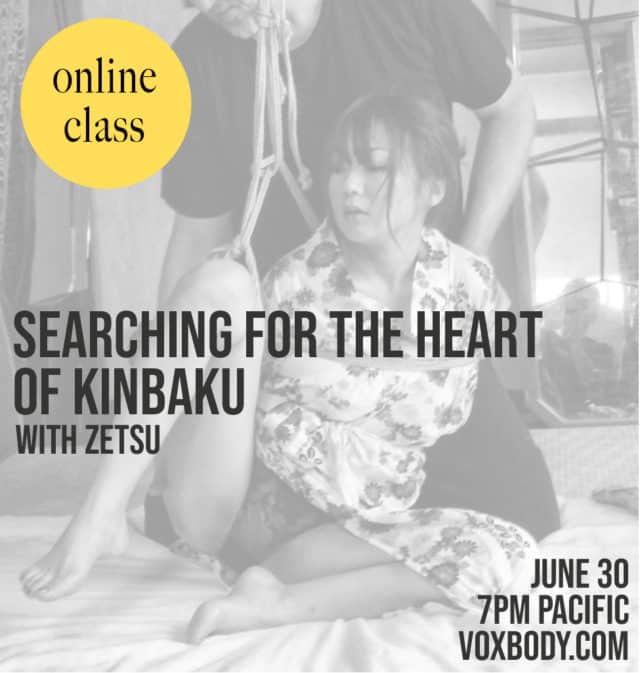
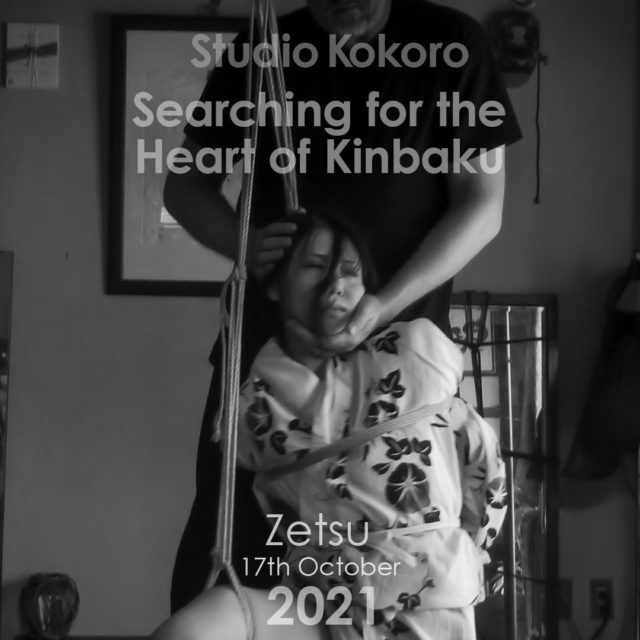
October 17th: Searching for the Heart of Kinbaku: A History of Japanese Rope and the People Who Created It

0

Tickets on sale here: https://studiokokoro.co.uk/tickets/

The history of kinbaku in Japan is a story that has been told many times. It has also been the site of conflict and struggle for grounding what kinbaku means today. Is it a noble and artistic pursuit following the glorious traditions of the ancient samurai? Is it dirty, sexual, hentai play that found its true expression in strip clubs and the Japanese adult video industry? Is it the product of kinky perverts trying to make a living doing bondage at the end of the Showa era as bondage magazines, stage shows, and VHS video started to become increasingly available?

In a way it is all of those things and more. Every story that is told about the history of kinbaku has something to teach us about what it is we do today.

This presentation is not the history of Japanese rope, but rather a history. In that sense it is much more personal reflection and interpretation rather than history per se.

It is also an invitation for everyone who attends to write their own history of kinbaku, to find the stories that are meaningful and that resonate in a way that can give meaning to your own experience and practice and to imbue it with a richness that can make your connection to rope more meaningful and more personal.

My story is one of discovery. Starting with computer bulletin board systems in the 1980s, where I saw my first images of kinbaku and which ultimately led me to Japan in 2006 to start my studies of kinbaku.

Along the way, I have amassed a collection of books, videos, ephemera and memories and have had countless discussions with practitioners in Japan that has led me to dig deeper into the question “What is the heart of kinbaku?”

My story begins with the stories of three men, Ito Seiu, Minomura Kou, and Tsujimura Takashi and how their lives, as well as their styles of rope, created the basis for much of what we call kinbaku today. Along the way, I discuss Osada Eikichi and the invention of the kinbaku stage show, Nureki Chimuo’s Kinbiken salons, Urado Hiroshi and Pink Eiga films, Akechi Denki and the evolution of rope styles, and Yukimura Haruki’s style of caressing rope.

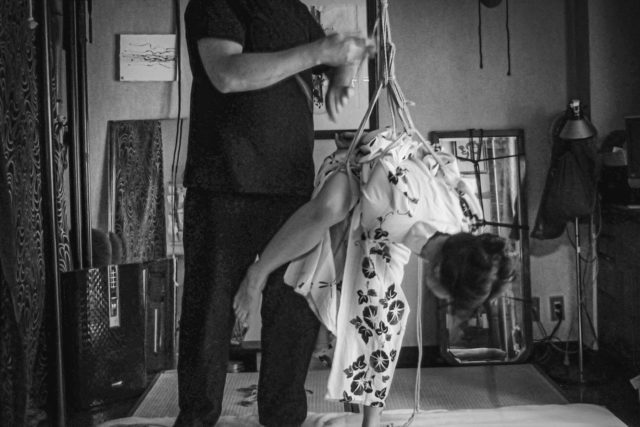
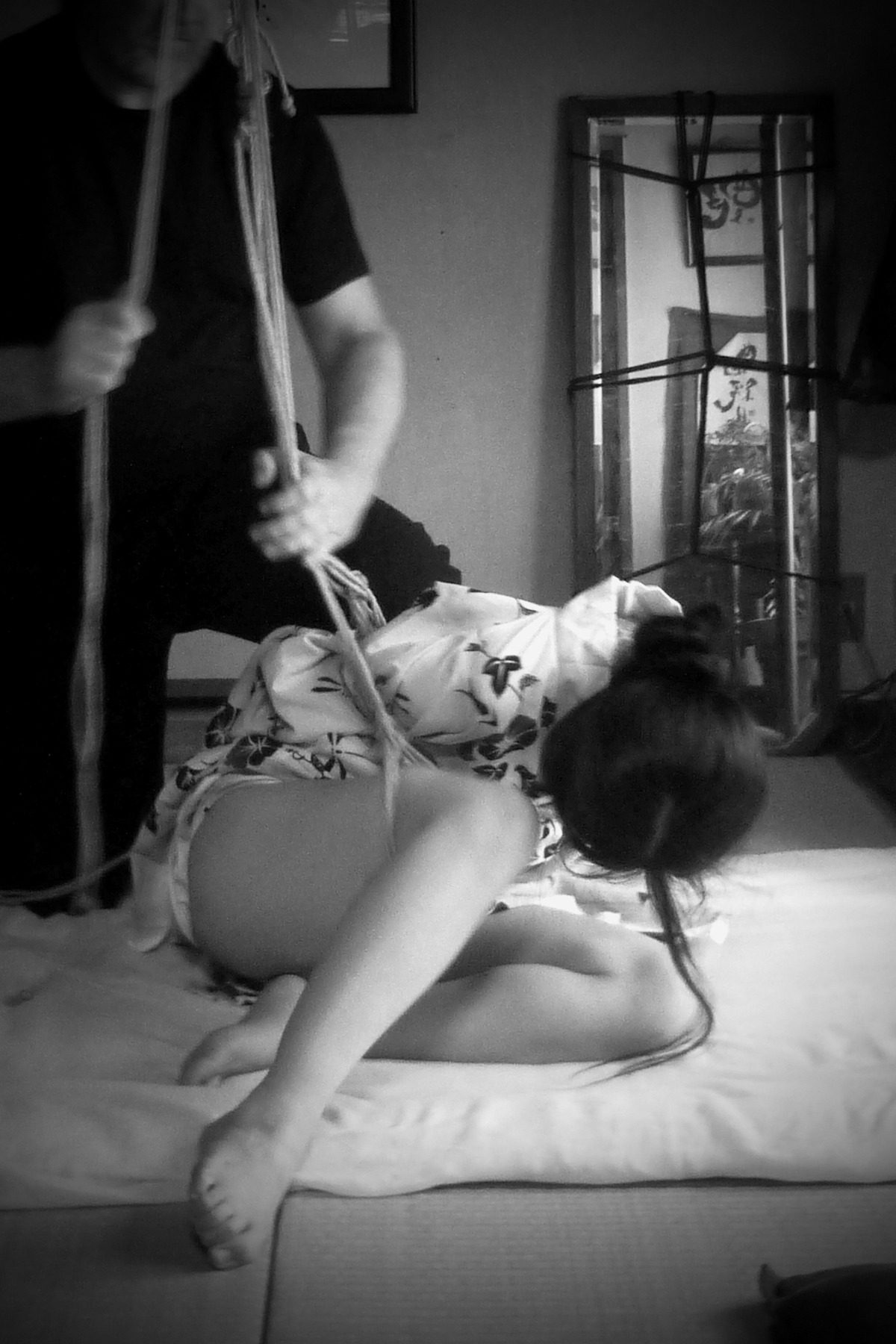
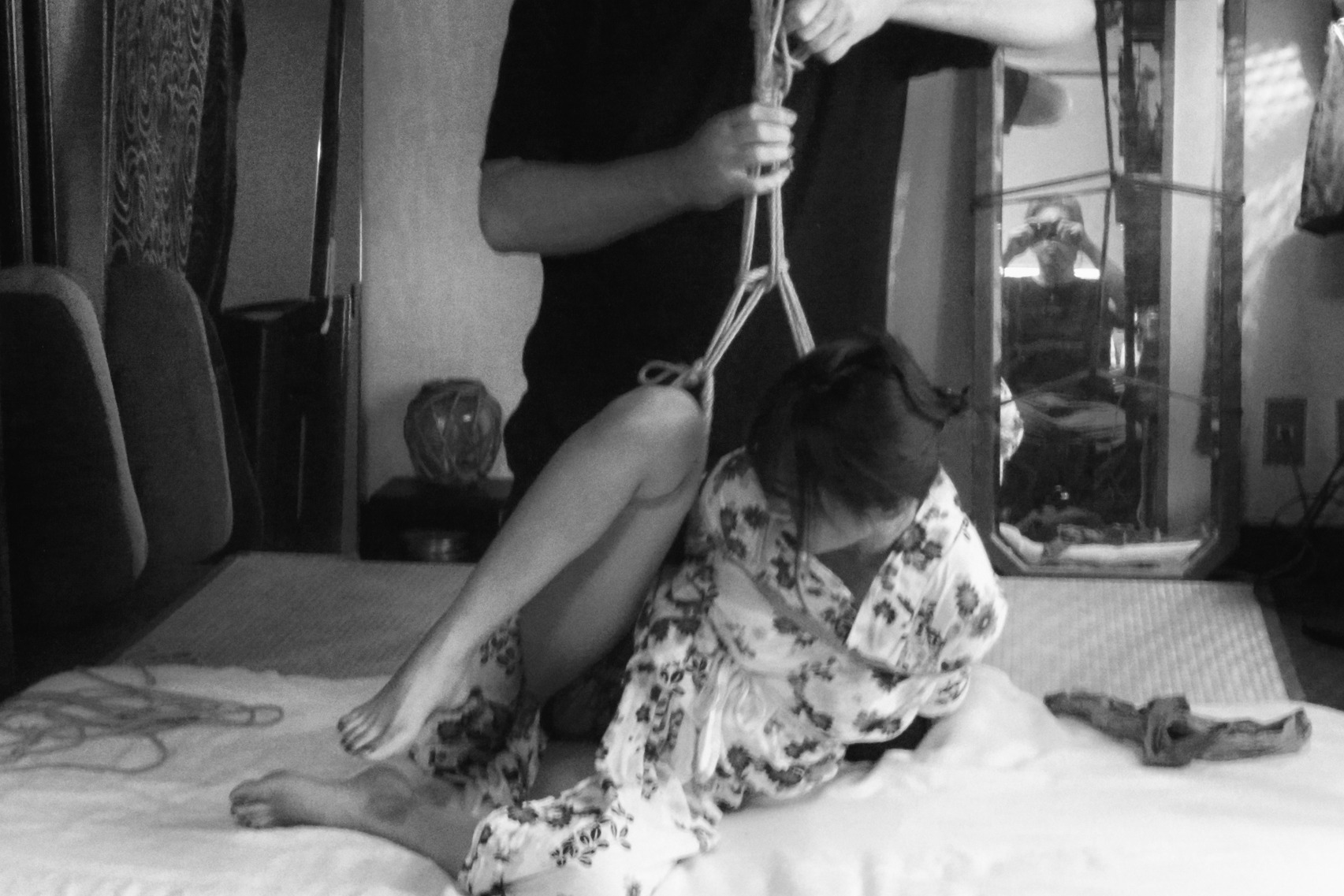
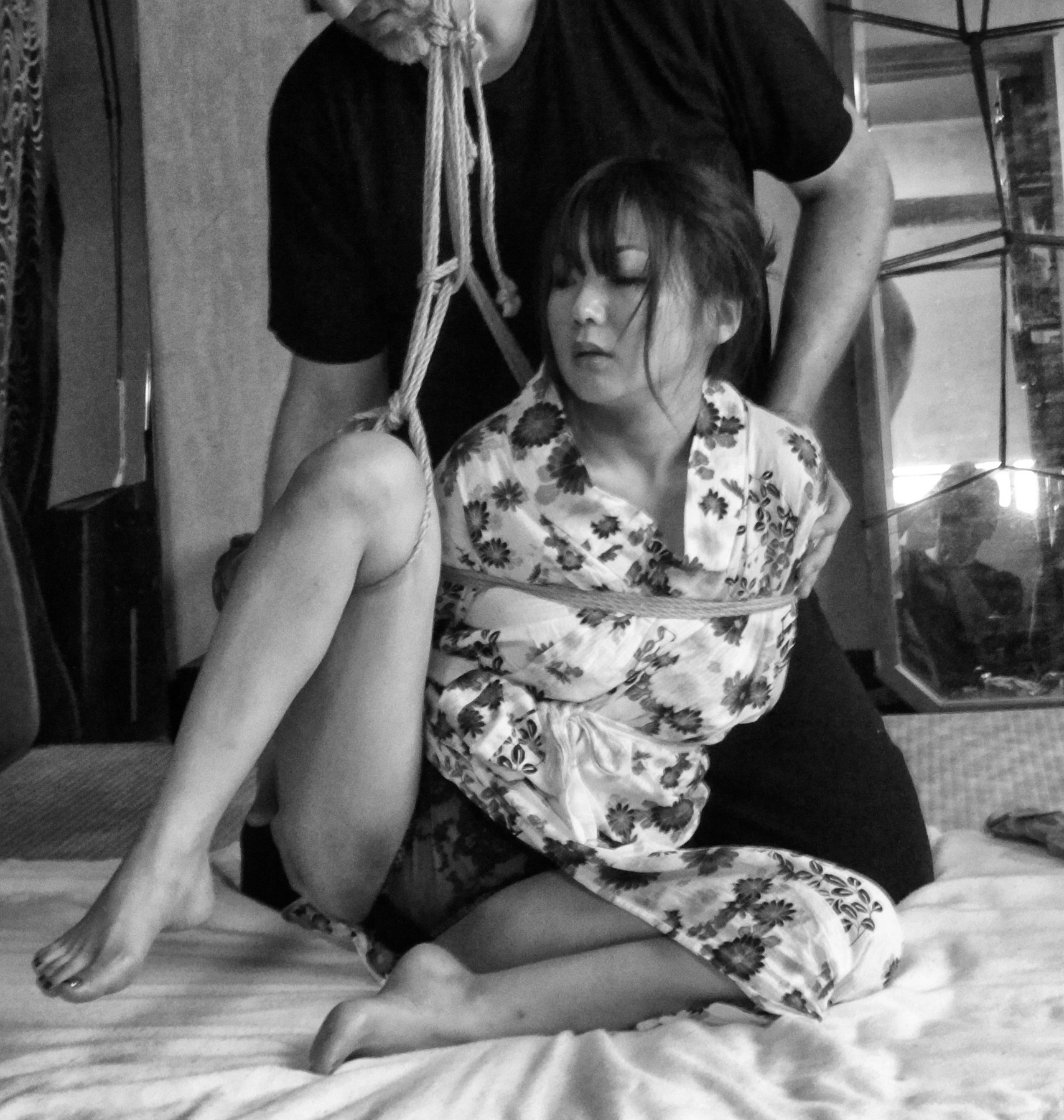
Gallery: Akane

0

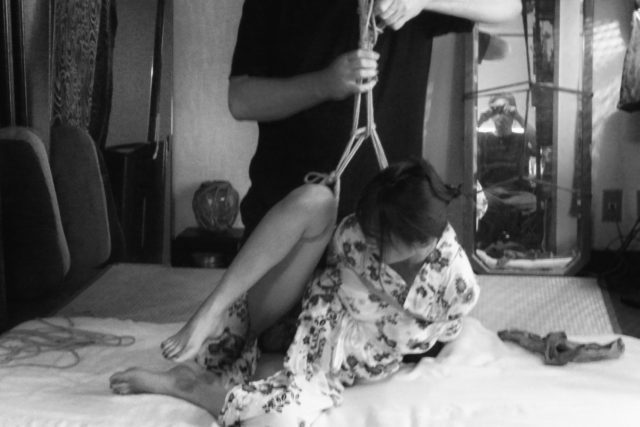
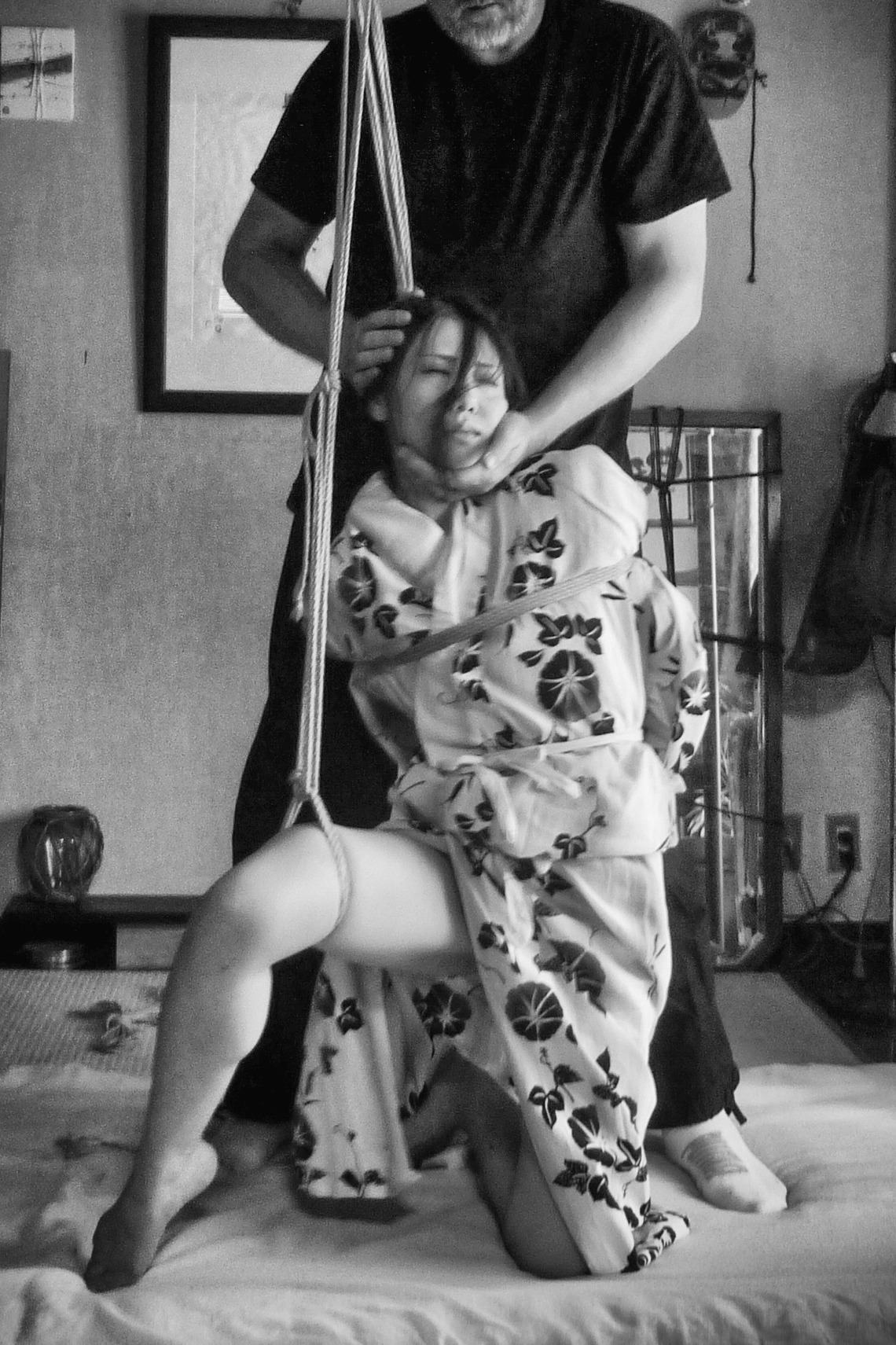
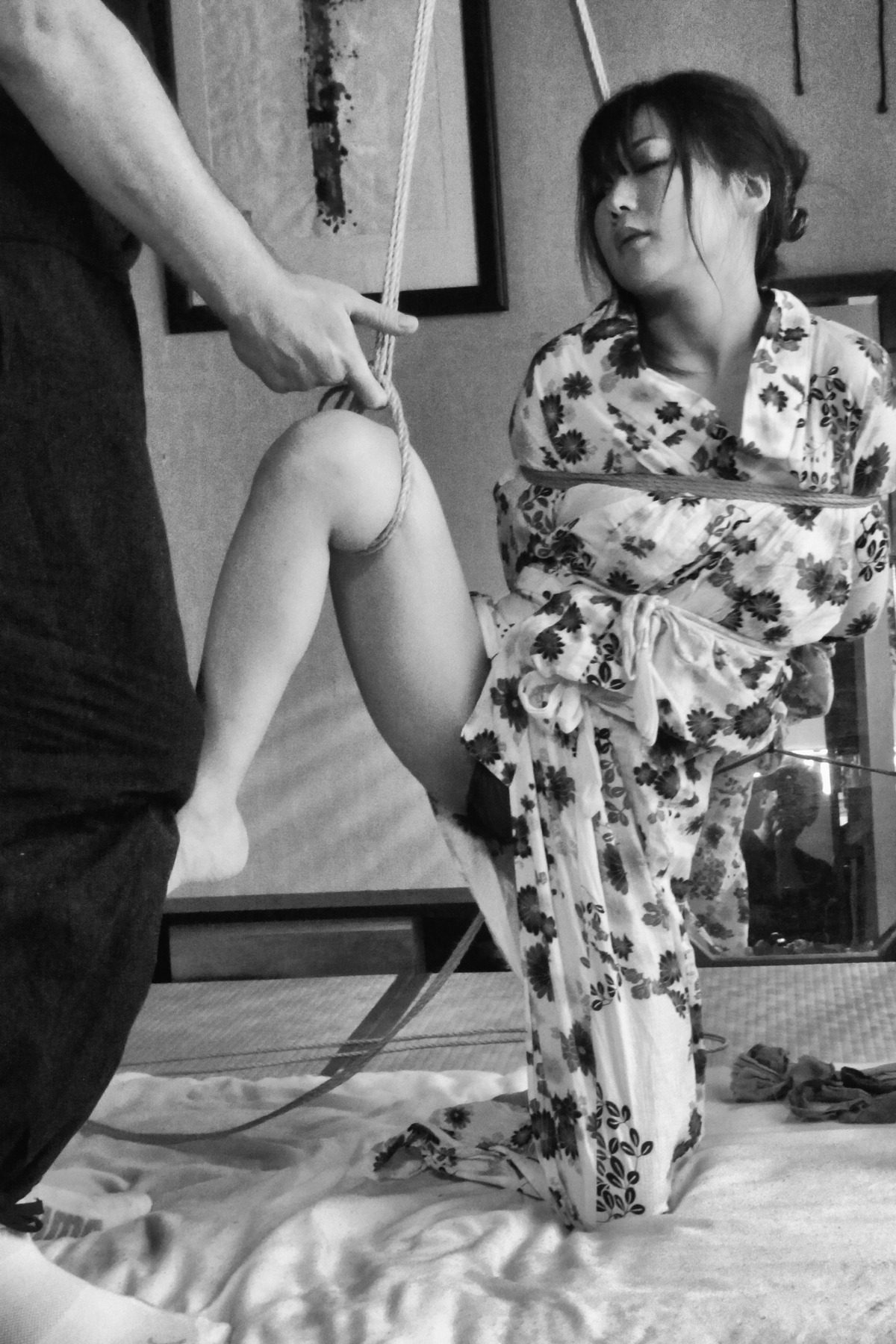
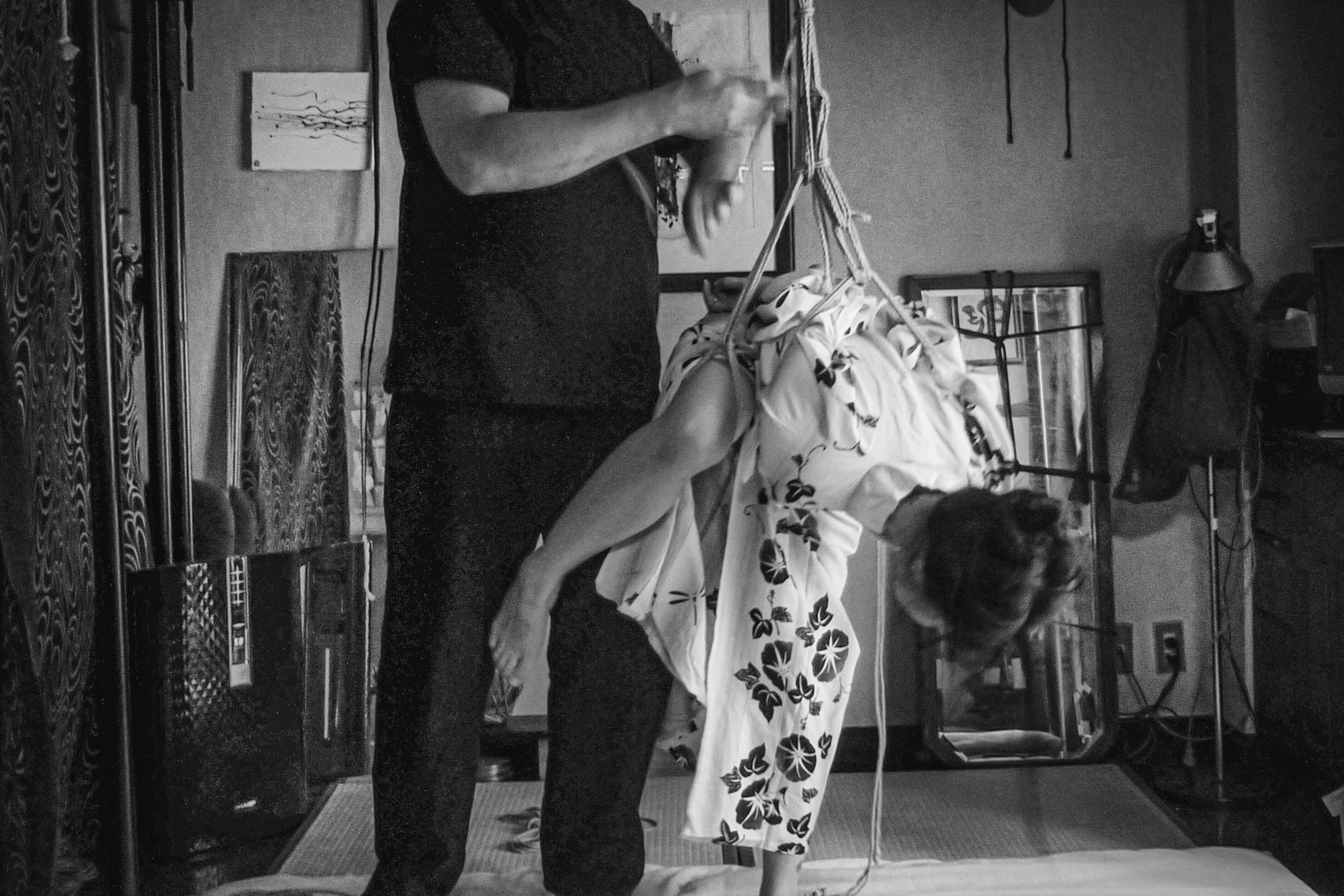
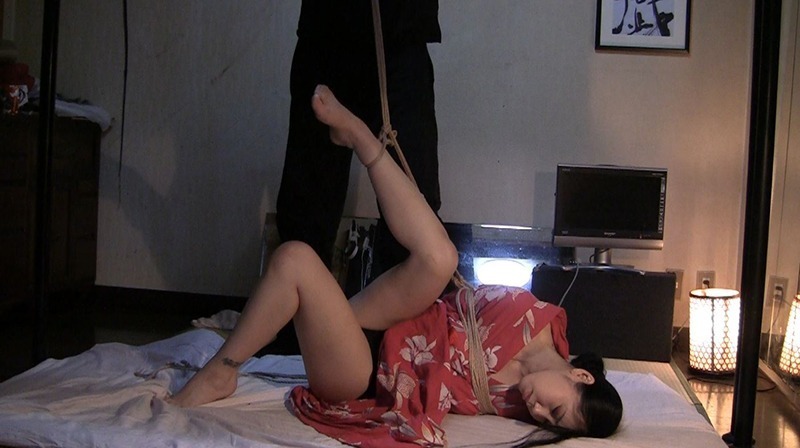
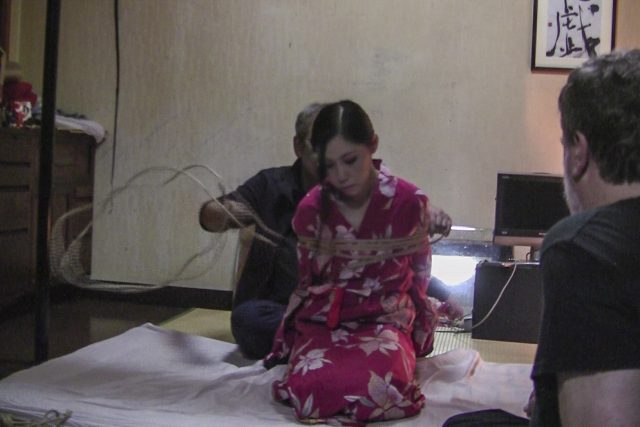
Images from 2013 in Ebisu, Tokyo. Model: Akane. Photographer: Yukimura Haruki

Working on a variety of poses for kata ashi zuri (片足吊り, single leg partial suspension)

What is Yukimura Style Shibari?

0

Yukimura Haruki (1948-2016) was one a handful of bakushi (rope masters) who elevated the art of tying by creating his own style (ryuu in Japanese) that focused on eroticism and using rope for communication.

Like Minoruma Kou, who was his early teacher and influence, Yukimura sensei was very much of a rope minimalist, avoiding ties that were overly complicated or which relied on excessive amounts of rope.

I had the honor of studying with Yukimura sensei for six years, first meeting him in 2010, hosting him in Los Anegles in 2012, becoming a member of his school (given the name Haru Yutaka) and receiving my teaching license in 2013. I visited him regularly and studied with him in Tokyo until his death in 2016.

I believe that Yukimura taught each of his students differently, depending on who they were and how the approached rope. So my thoughts and reflections about Yukimura’s style are decidedly my own and may vary from other students’ interpretations and experiences.

Early on, one of the things Yukimura sensei told me was that it was important to learn the basics and master the fundamentals of his style and then to “make it your own.” In that sense, Yukimura Ryuu is not a set of ties, patterns, or kata. It is a way of thinking about rope, grounded is a word that he used frequently, communication.

That communication is not just what you share and impart with your rope, it is also an act of listening, of understanding what your partner is communicating with their movement, sounds, expressions, and body. Rope is not something you do to someone; it is something you do with someone.

The purpose of tying, for Yukimura, was to awaken and play with his parter’s eros, the sensual, and often playful element that makes rope bondage its erotic nature. Through fantasy and arousal, Yukimura would use rope to allow his partners to express parts of themselves that were often forced to remain hidden or repressed in everyday life.

That notion of freeing what was hidden or repressed contributes to a particular feeling that is another core element of Yukimura style rope play, hazukashii. The term hazukashii can loosely be translated as embarrassment, but it also connotes a sense of shyness, exposure, and vulnerability. That sense of embarrassment is then tied to those feelings of exposure, vulnerability, and, especially, arousal, creating a sense of erotic helplessness or surrender.

Though his ties could be simple, the psychology behind them was always complex. His focus on using rope for communication made every tying session into a conversation and every tie an exploration of feeling, emotion, and intention.

One of the key elements of this style’s technique is the use of the nawajiri, the end of the rope (literallly the ass end of the rope), which is used to convey feeling and emotion, as well as to help guide and position your partner to allow them to be tied in different ways, to be posed, or even to create and communicate additional feelings during a tying session.

It is the primary conduit we use in Yukimura style to communicate with our partner.

While many other styles focus on precision tying, carefully placed rope, and clean and deliberate ties, Yukimura’s style was much more concerned with how rope felt, rather than how it looked. The goal is always a psychological one, set by intention, fantasy, and eroticism.

In addition to being a bakushi, Yukimura was also a calligrapher of some renown. His rope style was not unlike his shodo.

As a result, his ties could have a look to them that would resemble something close to the Sōsho style of calligraphy, which focused on aesthetic beauty, rather than legibility. Where more basic styles such as Kaisho (square style) and Gyōsho (semi-cursive style), are much more clear and recognizable as kanji, Sōsho is fluid and often difficult to read, especially for those less familiar with kanji.

Like his shibari, Yukimura’s shodo was about beauty and flow, communicating its meaning through a fluid style and sense of movement that conveys personality, feeling, and emotion more than precision or clarity.

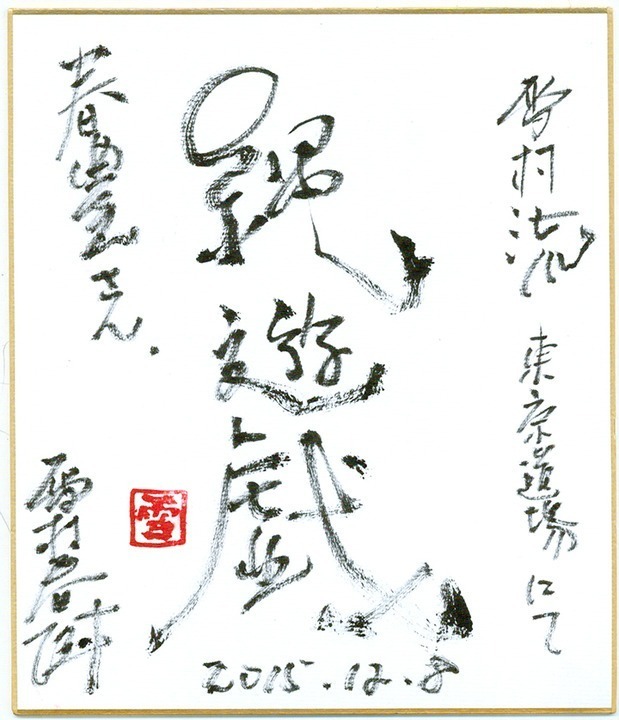
One of his personal gifts to me was a piece of shodo, which reads “Nawa Yuge” (縄遊戯) or “Rope Game” after a long discussion of what “rope games” are and what they meant to his style of rope.

For Yukimura, rope was a game of finding his partner’s eros, what it was that aroused them and made them excited. The game was to find it, engage it, and play with it, to get your partner worked up into a state of sexual excitement, desire, or even frenzy.

Doing so was what it meant to “win the game” and failure to do so was losing the game.

Rope games get easier to play with partners you are close to or intimate with, so for Yukimura one of the greatest challenges and the highest level of rope games was to tie with a new partner, using rope to discover things about them through the process of tying them. Tying someone new presents an opportunity to learn about them and to awaken their eros in new and exciting ways.

That was where Yukimura was truly expert, finding and releasing his partner’s eros.

What constitutes eros and how it manifests and is expressed is as unique as the individual being tied and can be constantly changing and evolving.

Studying Yukimura style rope is more than just learning ties, techniques, and patterns; it is about learning how to tie a person and how to create feelings and emotions that can curate an experience for them.

While the ties can be simple and the techniques are easy to learn, the deeper elements of the style, how to use those techniques to awake and play with your partner’s eros, can take a lifetime to master.

New to Shibari? Start Here

2

Over the past few years the interest in Japanese erotic rope bondage has exploded. Whether you call it shibari or kinbaku or just Japanese rope, it is worth considering a few things before you head off to YouTube or How To videos and books to start playing with rope.

The immediate impulse is to want to learn how to tie. That means learning patterns. Steps. How do you make that harness you saw on Instagram or how do you create that cool looking basket weave leg tie that makes my partner look like a mermaid?

Before you do that, I want to encourage you to do a few other things first.

One of the most powerful and beautiful things about rope is that there are innumerable styles and approaches to tying your partner. But it is important to understand that each of those approaches are designed with a particular goal in mind. Some may be designed for semenawa (torment rope) while other may be more focused on vulnerability and exposure. Some ties are structured for suspensions, some aren’t. Different approaches or styles are designed to evoke different responses and have different techniques to achieve those responses.

What that means is that the first thing you need to think about is what do you and your partner want to get out of your rope experience?

How you tie depends entirely on what you want to get out of the experience. What is it that you enjoy about tying or being tied? Is it aesthetic, emotional, communication, pain play, D/s, erotic, about exposure, vulnerability, or surrender? Each of those approaches have a variety of approaches, techniques, schools, etc.

The most important thing you can do when you are starting is figure out what it is you want, like, and desire and make sure your partner is on the same page. Talk about it and figure out what appeals to you and then find someone with experience teaching that style of rope.

Even just starting out, you can have some very intense and very intimate rope scenes with a single length of rope and one or two basic ties. Rope and ties are nothing more than tools, which allow you to do other things. What kind of experience do you want to create for yourself and your partner? Figure that out first and the use your rope as a way to create that.

Once you both understand what feelings, emotions, sensations, and intensity you want to share, then it is time to starting thinking about which ties can produce those effects.

If rope is something you want to do with someone, rather than just to someone, it makes sense to start with the communication and experience, rather than with the technical aspect.

Once you find a tie that fits the experience you want to create, then you need to start thinking about how you tie it. Do you do it standing or sitting? Slow or fast? Do you pull your partner close to you or keep them at a distance? Do you whisper in their ear while you tie? What do you say? Do you want them happy, excited, turned on, objectified? Rope can help you create any of those things and much much more.

Once you have figured all those things out, find the tie you want to learn and spend time with your partner tying it every way you can imagine. Then talk about it. What did you like? What did they like? What felt good and what didn’t? What things produced the effects you were looking for? Did you discover anything new? Build a vocabulary so that the rope can start to produce a conversation every time you tie.

If you are just starting out, I would recommend an exercise. Tie your partner’s hands together in front of them. Do it over and over and see how many different feelings and emotions you can convey in that simple act. Get creative. Tie it loose, tie it tight. Slow. Fast. From in front. From behind. Think about every touch and every sensation. Watch your partner’s responses, their breathing, how they move, and what sounds they make.

Before you study the rope, study your partner. Learn how to read them and how to create experiences for them. Learn to communicate with your body, your hands, your body position, your timing, and your intention.

Nothing I am saying will get you any likes on Instagram or make your pictures Kinky & Popular on Fetlife, but what it will do is add a layer of communication, fun, and pleasure to your rope bondage time.

In shibari there is an important distinction between kokoro, the heart or spirit of something, and katachi, the technique. Understanding the feelings, emotions, and desires that you want to explore (the kokoro) is what animates and gives meaning to the technique.

Learning how to do ties and repeat patterns doesn’t make your rope “shibari” anymore than owning a typewriter makes you a novelist.

Once you learn how to do a new tie, all your work is still in front of you. You have to figure out how the tie relates to you and how it relates to your partner. Does it do the things you need it to do to express what you want to express? Does it create the feelings you want your partner to experience?

Shibari is not tying the ropes, it is tying your partner and when you are just starting it is hard to see the difference between the two.

If you are interesting in reading more about communication and emotion in rope, please take a look at my book Discovering Kinbaku available at Amazon.

Group Class to Resume Mid-April

0

Following CDC guildlines, LA Rope will be re-opening for group lessons. Participants (including instructors and demo bottoms) must be fully vaccinated (two weeks past final vaccination date).

Classes will run on Tuesday and Thursday nights, offering two distinct introductory classes, covering rope fundamentals. Our plan is to expand class offerings in May to four full intro classes, which will expand to a range of additional ties.

We are looking forward to teaching again and celebrating the return of in person classes!

Sign up now, as class spots are sure to go fast.

We look forward to seeing you!

Remembering Yukimura Sensei

0

Today is the fourth anniversary of Sensei’s passing. It seems hard to believe it has been that long. The memories I have still feel so fresh.

Ibarako: Tying Men

0

This video is the first Japanese instructional video focused exclusively on tying men.  With English translation and interpretation, this video teaches you how to tie men from the most basic fundamentals to more advanced technique.  Suitable for all levels of tying, there is something in this video for everyone.  The video features discussion, hands on demonstration, close-up video of each tie, examples of how to use each tie to dominate and control your partner, and a full rope scene demonstration,  The video includes a special section of penis bondage, with close up demonstration.

This video is more than a simple “how to tie.”  It will teach you how to create amazing rope scenes for you and your partner to enjoy.

The video covers:

  • Tying the Wrists
  • Using the Nawajiri for Control
  • Tying the Arms Behind the Back
  • Neck Play (kubi-nawa)
  • Other Ways to Dominate
  • Tying with Rope
  • Hands in Front (Maete Shibari)
  • Hands in Front II
  • Hands Behind the Back (Gote Shibari)
  • Hands Behind the Back II
  • Playing with the Hands in Back
  • Tying the Penis
  • Model’s Reaction
  • Playing with the Hands in Front

Teaching Rope Fundamentals and Scene Building

Basic Ties (Cloth and neckties)

Introducing basic construction, application, and play styles

Using Rope (Maete and Gote Shibari)

Using rope for maximum effect, rope handling and placement for maximum effect

Penis Ties

Using small diameter rope for cock and ball bondage as part of your rope play

Rope Play

Putting it all together to create effective and memorable rope scenes

LA Rope Shoots with Lana Del Rey for Italian Vogue

0

Recently, I was lucky to spend the day shooting with famed fashion photographer Steven Klein for a layout in Italian Vogue magazine.

The theme for the shoot was high class fashion in a low class setting and the model was Lana Del Rey.

It was a fascinating shoot for many reasons.

Working with fashion photographers is always interesting. This is the third time I have had the experience of shooting with someone who is a master of their craft and watching them work is always a lot of fun.

Tying for them can be a challenge because they often have a hard time articulating what they want. Often what they will do is show you some images of what they like, not realizing the things they are showing you are often radically different. One shot may be 10mm cotton rope tied in a very decorative pattern, with the next is traditional kinbaku with a full takate kote with natural colored jute.

It can be difficult to explain the differences to someone without any background, so you have to try to find what it is they are looking for with no common vocabulary.

Model: Lana Del Rey
Photographer: Steven Klein
Rope: Zetsu, LA Rope

In this case, it was going to be red rope and roses.

I demo the tie on a stand in and show him the pictures and he loves it. Unfortunately when it comes time to tie Lana Del Rey, she has a great deal of difficulty tolerating the rope and we need to readjust almost every aspect of the tie to make her feel comfortable and to get the shots the photographer is looking for.

It is a challenge but one we are able to meet.

As a result, we not only get some beautiful shots, but the red rope and rose image gets selected as one of the cover shots.

It was a lot of fun working with them and, after a long day, I think everyone was really happy with the outcome.

LA Rope Presenting in Dallas, June 29th, 2019

0

LA Rope will be taking our show on the road, teaching at a mini-conference this month in Dallas. Join us for two classes: A History of Erotic Rope Bondage: Key Figures from the Golden Age of SM and Introduction to Yukimura Ryuu: Shibari as Communication.

For those in the Dallas area, tickets are available here: DFW Community Classes & Play Party–One Day MiniCon

Learn Shibari in Los Angeles

6

LA Rope has been teaching shibari in Los Angeles since 2011. Trained in Tokyo by the late Grand Master Yukimura Haruki, the head instructor (Haru Yutaka), offers personal instruction in the art of Yukimura’s caressing style.

Unlike other schools of rope, which may focus on complicated patterns, Yukimura’s style of rope is designed to heighten communication between partners and develop a deep sense of intimacy.

Our introductory class provides some basic history, background, and safety information before teaching a series of basic ties that can be used immediately and which allow even novices the room to explore and experiment with a wide variety of ties and positions.

Our goal is show the depth and beauty of even the most basic techniques, as well as to provide the building blocks for more advanced study.

We offer more than just techniques, we teach a broader philosophy of rope that teaches you to tie, respond to, and communicate with your partner.

Private classes are available most weekday afternoons and evening.

Sign up now and begin an amazing adventure of fun, eroticism, and amazing intimate communication.

Kinkly Review of LA Rope (Intro Class)

0

The folks at Kinkly have just published a review of our first Tuesday Rope Play class.  It is a great read for anyone who might be interested in doing rope for the first time.  Written with a great sense of humor, it does a good job of capturing both the spirit and tone of what are classes are like.

The article “Kinbaku and You: A First Timer’s Foray Into Rope Play” gives a strong sense of what our classes are all about, introducing rope to people who want to develop better and more intimate communication with their partners.

My favorite part of the article was the express of trust that he felt he built with his class partner:

This is certainly one way to supercharge a new friendship. Despite not knowing her for too long, I feel like Diana and I already have a deep foundation of trust. How can you not after that? And that is the thing that surprised me the most about Kinbaku; it’s not about pain and humiliation. It’s about absolute trust and subtlety. The way that slowly dragging the rope across your partner’s skin communicates more than words can ever say. Or how simply tightening a knot can send both of you into a fleeting moment of bliss. If you’re looking for a unique date you and your partner won’t forget, this is it.

Thanks to Kinkly for the write up!  I hope it helps others take the first step in broadening their erotic horizons!

LA Rope at Hentai Con (Nov 2-4)

0

LA Rope, Japanese Bound and Rope Flix will be vending and teaching at this year’s first ever Hentai Con.

Tickets are available for $40 for the whole weekend: https://www.hentaicon.com

We will be teaching a class on the history of Japanese fetish culture on Friday, doing a movie viewing Saturday evening, and a hands on rope workshop Sunday afternoon.

More details as the schedule is confirmed.